Ahead of this year’s celebration of Hanukkah, here are eight important facts about the holiday:
1. Hanukkah is the only Jewish holiday that commemorates an ancient national liberation struggle in the Land of Israel, unlike Passover, Sukkot/Tabernacles, and Shavuot/Pentecost, which commemorate the liberation from slavery in Egypt to independence in the land of Israel, and unlike Purim, which commemorates liberation from a Persian attempt to annihilate the Jewish people of Persia.
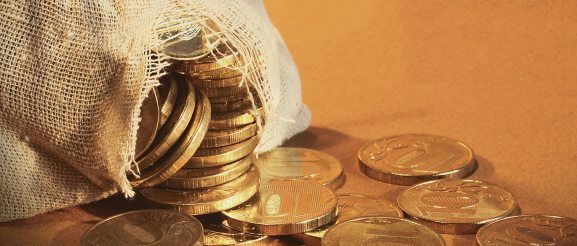
2. According to an NBC news report on December 13, 2022, “An ancient treasure trove of silver coins dating back 2,200 years, found in a desert cave in Israel, could add crucial new evidence to support a story of Jewish rebellion …. The 15 silver coins were hidden [during] the Maccabean revolt from 167-160 B.C., when Jewish warriors rebelled against the Seleucid [Syrian] Empire….”
3. In 1777, Hanukkah candles were lit by a Jewish soldier, during the Valley Forge encampment, the turning point of the Revolutionary War. Benjamin Rush, a signer of the Declaration of Independence and a player in the ratification of the US Constitution, wrote: “What shining examples of patriotism do we behold in Joshua, Samuel, the Maccabees and the illustrious princes and prophets among the Jews…”
4. According to Israel’s Founding Father, David Ben-Gurion: Hanukkah commemorates “the struggle of the Maccabees, which was one of the most dramatic clashes of civilizations in human history, not merely a political-military struggle against foreign oppression. … Unlike many peoples, the meager Jewish people did not assimilate. The Jewish people prevailed, won, sustained and enhanced their independence and unique civilization. … It was the spirit of the people, rather than the establishment, which enabled the Hasmoneans to overcome one of the most magnificent spiritual, political and military challenges in Jewish history…” (Uniqueness and Destiny, pp 20-22)
5. When ordered by Emperor Antiochus IV Epiphanes of the Seleucid region to end the Jewish “occupation” of Jerusalem, Jaffa, Gaza, Gezer, and Akron, Shimon the Maccabee responded: “We have not occupied a foreign land. … We have liberated the land of our forefathers from foreign occupation (Book of Maccabees A: 15:33).”
Hanukkah highlights the centrality of the Land of Israel in the formation of Judaism and the Jewish people. The mountain ridges of Judea and Southern Samaria (the West Bank) — the cradle of Jewish history, religion, culture and language — were the platform for the Maccabean military battles.
6. Hanukkah’s historical context is narrated in the Four Books of the Maccabees, The Scroll of Antiochus, and The Wars of the Jews.
In 323 BCE, following the death of Alexander the Great (Alexander III, who held Judaism in high esteem), the Greek Empire was split into three independent and rival mini-empires: Greece, Seleucid/Syria, and Ptolemaic/Egypt.
In 175 BCE, the Seleucid/Syrian Emperor Antiochus (IV) Epiphanes claimed the Land of Israel. He suspected that the Jews were allies of his Ptolemaic/Egyptian enemy. The Seleucid emperor was known for eccentric behavior, hence his name, Epiphanes, which means “divine manifestation.” He aimed to exterminate Judaism and convert Jews to Hellenism. In 169 BCE, he devastated Jerusalem, attempting to decimate the Jewish population, and outlaw the practice of Judaism.
In 166/7 BCE, a Jewish rebellion was led by the non-establishment Hasmonean (Maccabee) family from the rural town of Modi’in, half-way between Jerusalem and the Mediterranean. The rebellion was led by the head of the family and his five sons, Yochanan, Judah, Shimon, Yonatan, and Eleazar, who fought the Seleucid occupier and restored Jewish independence. The Hasmonean dynasty was replete with external and internal wars and lasted until 37 BCE, when Herod the Great (a proxy of Rome) defeated Antigonus II Mattathias.
7. As was prophesized by the Prophet Hagai in 520 BCE, the re-inauguration of the Temple took place on the 25th day of the Jewish month of Kislev, which is the month of miracles, such as the post-flood appearance of Noah’s rainbow, the completion of the construction of the Holy Ark by Moses, the laying of the foundations of the Second Temple by Nehemiah, etc. The 25th Hebrew word in Genesis is “light,” and the 25th stop during the Exodus was Hashmona (the same Hebrew spelling as Hasmonean-Maccabees).
8. Hanukkah highlights the defeat of darkness, forgetfulness, disbelief, and pessimism, and the victory of light, commemoration, faith, defiance of odds, can-do mentality, and optimism. The first day of Hanukkah is celebrated when daylight hours are equal to darkness hours — and when moonlight is hardly noticed — ushering in brighter days.
A Hanukkah Guide for the Perplexed
Hanukkah in 2025 begins at sundown on December 14 and ends at nightfall on December 22.